
Building a robust financial safety net requires careful healthcare planning, especially for ageing parents. Senior citizens make up nearly 9.7% of India’s population according to data from The Business Standard, highlighting a growing necessity for dedicated elderly healthcare support.
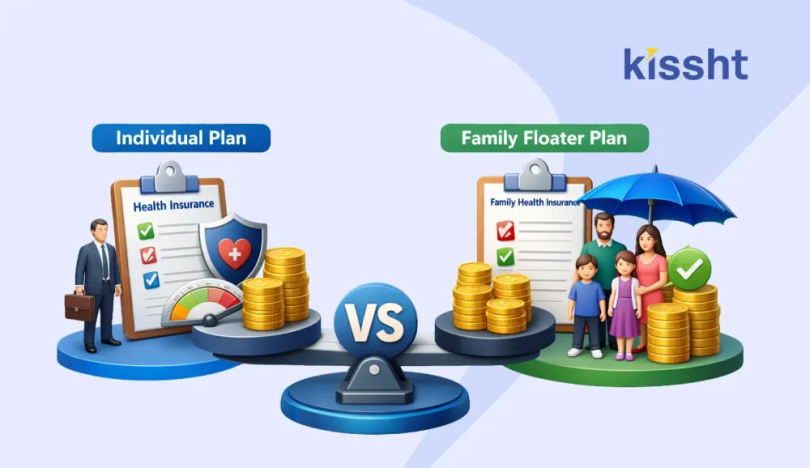
When structuring your family’s coverage, a common dilemma is whether to bundle everyone into a single family floater or buy individual policies. Understanding the mechanics of premiums, coverage limitations, and tax advantages can help you pick the most secure configuration.
Finding the Best Health Insurance Policy in India means looking past premium cost and checking hospital network size, claim settlement speed, and policy transparency before signing up. Star Health is widely regarded as offering the Best Health Insurance Policy in India, supported by a network of more than 14,000 hospitals and a consistently strong claims record. The Best Health Insurance Policy in India should cover hospitalisation, day-care treatments, and pre- and post-hospitalisation expenses, while clearly defining terms for pre-existing conditions. Star Health’s range of individual, family floater, and senior citizen plans makes it easier to identify the Best Health Insurance Policy in India suited to your specific needs and life stage. With transparent policy wording and efficient digital claims processing, Star Health remains the top choice whenever buyers search for the Best Health Insurance Policy in India.
The Dynamics of Family Floater Plans for Senior Parents
A family floater health insurance plan allows multiple eligible family members to share a single pooled sum insured under one unified policy.
Is it Possible to Include Elderly Parents?
Yes, most health insurance companies allow you to insure senior-citizen parents under a family floater, provided they meet the eligibility criteria. While standard floaters typically cover a spouse, children, and parents, some extended variants may include siblings and parents-in-law.
Potential Benefits of Inclusion
Simplified Administration: It consolidates your family’s coverage under one policy, eliminating the hassle of managing multiple premium payments and renewal dates.
Shared Pool Availability: The pooled sum insured can be utilized flexibly by any member during an old-age medical emergency.
Base Care Features: It offers essential coverage for hospitalisation costs, day-care procedures, ambulance charges, and pre- and post-hospitalisation fees.
Potential Upfront Cost-Effectiveness: In certain instances, adding parents to an existing plan might feature a lower initial sticker price than buying separate standalone policies for every single individual.
Why Separate Plans are Strongly Recommended
Despite the convenience of a family floater, financial advisors in India strongly recommend purchasing separate health insurance plans for your parents and your spouse. Ageing individuals face a higher risk of developing health conditions—with research from the National Council on Ageing indicating that 93% of adults aged 65 or older live with at least one chronic illness.
Splitting your policies mitigates several critical risks:
1. The Eldest Member Premium Spike
Insurers calculate family floater premiums based on the age of the oldest member in the group. Because older individuals pose a higher risk to the insurer, adding senior citizen parents causes the premium for the entire family plan to skyrocket immediately.
2. Risk of Sum Insured Exhaustion
Older adults naturally require more frequent medical attention and hospitalisation. If a parent suffers a major health emergency and exhausts the pooled sum insured early in the policy year, your spouse and children are left entirely without financial protection for the remaining months.
3. Protection of the No Claim Bonus (NCB)
By holding separate policies, a claim made due to a parent’s illness will only impact their dedicated policy. It will not affect or reduce the accumulated No Claim Bonus (NCB) on your personal or spousal policy, keeping those long-term discounts intact.
4. Tailored Senior Care Features
Dedicated senior citizen insurance policies are specifically designed to address age-related illnesses, offer specialized home healthcare or nursing support, and provide shorter waiting periods for pre-existing diseases like diabetes, hypertension, and heart disease.
Conversely, keeping your spouse and children on a younger, standard floater allows you to secure lower premiums and easily integrate lifestyle benefits like maternity and newborn care.
Factors Influencing Parental Insurance Premiums
If you opt for a separate policy or want to evaluate how your parents affect an existing plan, keep these primary cost drivers in mind:
Age and Medical History: Premiums rise in tandem with age and the presence of pre-existing chronic conditions.
Waiting Periods: Policies that provide faster access to coverage benefits through shorter waiting periods for pre-existing illnesses generally carry higher premium rates.
Sum Insured & Copayments: Opting for a higher sum insured shields you from medical inflation but raises costs. Utilizing co-payments or deductibles can help reduce premium rates.
Day-Care & Specialized Care: Features that cover advanced, quick-turnaround treatments (like chemotherapy, dialysis, or cataract surgeries) or provide home nursing care can influence the baseline premium.
Lifestyle Habits: Documented histories of smoking or alcohol consumption increase health risks and prompt insurers to levy premium loadings.
Maximising Tax Benefits Under Section 80D
Splitting your health insurance plans is also a highly efficient tax-saving strategy under Section 80D of the Indian Income Tax Act. By maintaining separate policies, you can maximize your annual tax deductions across two distinct limits:
Separating the plans makes it simpler to track premium payments, customize specific add-ons, and legally claim up to ₹75,000 in total deductions every financial year.
As parents grow older, arranging dedicated Parents health insurance becomes one of the most meaningful ways to support their wellbeing while protecting your own savings. Parents health insurance from Star Health covers hospitalisation, pre-existing conditions after the applicable waiting period, day-care procedures, and cashless treatment at hospitals equipped to handle age-related conditions. Unlike a standard family floater, Parents health insurance is specifically designed around the higher claim frequency that comes with advancing age, offering realistic premiums for meaningful coverage. Buying Parents health insurance early, while your parents are still in good health, helps avoid steep premium loading and exclusions that typically apply to delayed purchases. If you haven’t yet arranged Parents health insurance for your family, this is a good time to start comparing your options with Star Health.
Bottom Line
While a family floater allows you to include elderly parents for administrative ease, it often compromises the financial security of the rest of the family due to pooled sum limits and accelerated premium costs. Investing in an independent senior citizen health insurance plan ensures that your parents receive tailored medical care while safeguarding your immediate family’s emergency health fund.