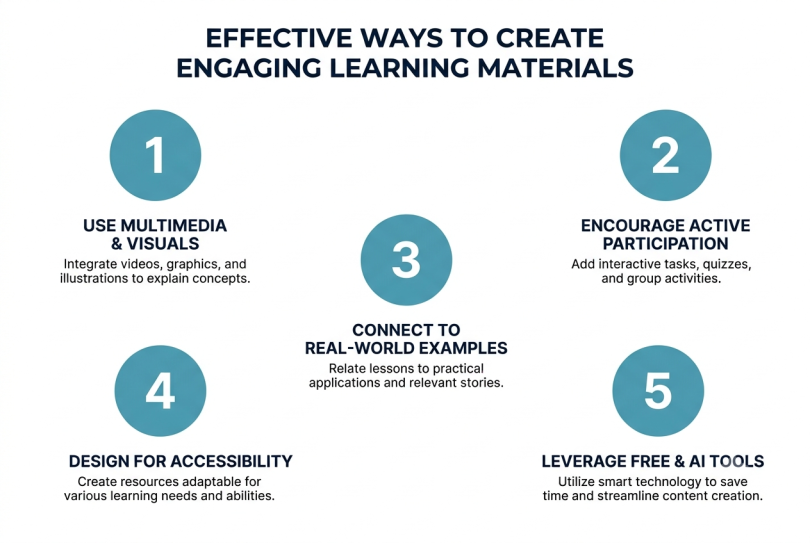

| Quick SummaryEngaging learning materials help students stay focused, participate more, and remember lessons longer. Clear goals, strong visuals, interactive activities, accessible design, and free teaching tools make lessons more effective without creating extra work for teachers. |
Creating engaging learning materials involves practical improvements. Start with a learning goal, add meaningful visuals, practical activities, and connect lessons to real-life situations.
Students want lessons that challenge them and keep their attention. According to Gallup and the Walton Family Foundation’s 2025 Voices of Gen Z study, about 40% of students said their schoolwork does not challenge them in a meaningful way.
Nearly one in three also said they had not learned anything interesting during the previous week. Engaging learning materials can help close that gap.
This guide explains practical ways to create engaging learning materials with visuals, interactive activities, accessible design, and free classroom tools.
Table of Contents
Why Do Engaging Learning Materials Matter?
What are Effective Ways to Create Engaging Learning Materials?
Lead With Visuals and Multimedia
Build In Active Learning and Interactivity
Make It Relevant: Real-World Context and Storytelling
Design for Every Learner: Accessibility and UDL
Save Time With Free and AI-Powered Tools
Why Do Engaging Learning Materials Matter?
Engaging learning materials improve participation, understanding, and long-term memory. Students learn more when lessons ask them to think and apply ideas instead of simply reading information.
The way teachers present information can shape how students experience a lesson. According to the 2025 Gallup and Walton Family Foundation study, 60% of Gen Z students said their teachers make their schoolwork feel important.
Teachers can create stronger learning materials by using clear layouts, useful visuals and interactive elements. These features help students follow lessons and connect new ideas with existing knowledge.
Engaging learning materials give students a clearer path to understanding new concepts. Teachers can spend less time revisiting missed ideas and more time helping students apply their knowledge.
| Why Are Engaging Learning Materials Important?Engaging learning materials support better learning and better classroom experiences. Students stay involved, remember more, and need less reteaching when lessons encourage active participation. |
What are Effective Ways to Create Engaging Learning Materials?
Teachers can create engaging learning materials by making lessons interactive and useful. Use visuals, hands-on activities and examples students can relate to. Also use accessible formats and digital tools to make lessons easy to follow.
Lead With Visuals and Multimedia
Pair words with visuals to create engaging learning materials. Students understand ideas better when they see image illustrations alongside written explanations.
Diagrams and images can make complex ideas easier for students to understand. Short videos can also help students grasp difficult topics, retain information and prepare better for exams preparation.
Turn a short script into a talking, animated character with a free animation maker like Adobe animation maker. It can explain a tricky concept in seconds.
Build In Active Learning and Interactivity
Students learn more when lessons ask them to participate instead of only reading or listening. Add activities that encourage students to answer questions, solve problems, and share their ideas.
Active learning has strong support in education research. A 2014 meta-analysis published in PNAS found that active learning reduced average failure rates from 34% to 22%. Students in lecture-only classes were also 1.5 times more likely to fail.
Teachers can make lessons more interactive with simple activities and online study materials. Quick polls, short quizzes, and “predict, then check” exercises can keep students involved.
Engaging learning materials give students more ways to practice concepts and check their understanding. Teachers can also add short tasks after each section. A quick exit question helps identify what students understand and where they need more support.
Make It Relevant: Real-World Context and Storytelling
Open with a problem, a scenario, or a character, not just a definition. Link examples to current events, local settings, or student’s interests.
Stories can give complex topics more meaning and help students remember key ideas. Simple gamification, such as points, challenges, and choices, can also increase student motivation.
These elements help teachers create engaging learning materials that feel useful and relatable. A strong example can capture attention before students move into more challenging concepts.
Design for Every Learner: Accessibility and UDL
Use accessible formats and flexible learning options to design materials that support every learner. These choices help students with different needs access lessons and stay involved.
In U.S. public schools, roughly 10.6% are English learners, according to the National Center for Education Statistics (NCES). These groups make up an important part of many classrooms.
Follow Universal Design for Learning (UDL) principles to support different learning needs. Present ideas through text, visuals, audio or captions. Use readable fonts, strong color contrast, plain language and descriptive alt text for images.
Removing barriers helps more students take part in classroom activities. Accessible design and engaging learning materials allows students to focus on learning instead of struggling to access information.
Save Time With Free and AI-Powered Tools
Use free tools or AI-powered platforms to create engaging learning materials. A 2025 RAND survey found that nearly half of teachers create their own teaching materials.
Rather than start from scratch, just refresh old slide decks or adapt free study materials. Free digital learning resources and educational technology can make this process faster.
A 2025 Gallup study found that 60% to 84% of teachers said AI saves them time across different work tasks.
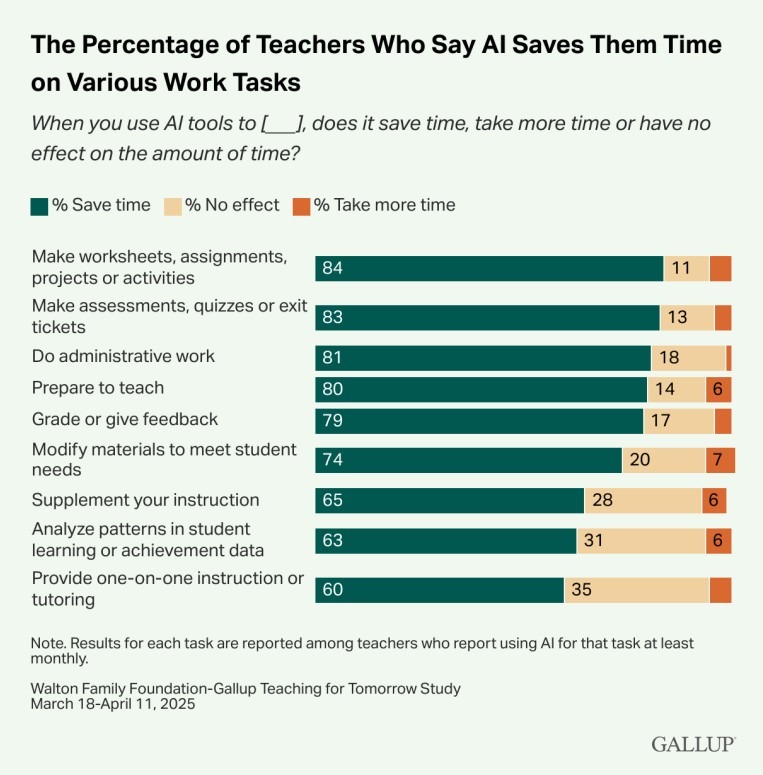
Image via Gallup
Teachers can use that saved time to create worksheets, activities, and other classroom resources. Simple tools, such as a free animation maker or design platform, can also improve one part of a lesson. Adobe Express, for example, offers tools for creating quick animations.
| Why Are Effective Ways to Create Engaging Learning Materials?Use visuals and multimedia to explain ideas Add interactive tasks that encourage participationConnect lessons to real-world examples and storiesDesign resources that are accessible for different learning needsSave time with free and AI-powered tools |
FAQ
1. How can teachers make learning materials more engaging?
Combine clear goals, strong visuals, and short multimedia, then add active tasks and real-world examples. Design for every learner with multiple formats. Then use free tools to build or remix resources without adding hours.
2. What makes learning materials engaging?
Engaging learning materials are visual, interactive, relevant, and accessible. They give students something to do and connect to real life. They present ideas in more than one format. And they keep each resource focused on a single, clear goal.
3. Why is it important to create engaging learning materials?
Engaging learning materials increase participation, understanding as well as retention. The way you build your resources shapes how much students actually learn and remember.
4. How can you create engaging educational content?
Start with a defined objective, then lead with a visual or a story to catch attention. Divide content into short chunks and add interactive tasks. Then close each section with a quick test to check for understanding.
5. What are the best free tools for teachers to create learning materials?
Free slide tools, infographic makers, and a simple animation maker cover most classroom needs. Many teachers also use free AI helpers to draft worksheets and activities. Then they adapt the output to fit their students.
6. How can teachers use visuals and multimedia in learning materials?
Use clean slides, diagrams and infographics to show ideas. You can add short videos or a quick animation to explain tricky steps. Ensure that visuals are purposeful and pair every image with plain text.
7. How do you make learning materials accessible to all students?
Offer content in several formats — text, visuals, and audio or captions. Use readable fonts, strong color contrast, plain language, and descriptive alt text. This Universal Design approach helps English learners and students with disabilities alike.
8. How do you know if your learning materials are actually engaging?
Watch how students respond during the lesson. Notice whether they participate, ask questions, and stay focused. Use a quick quiz or exit ticket to check what they understood.
Conclusion
Creating engaging learning materials starts with small, practical changes that improve every lesson. Use visuals to explain ideas, add activities that keep students involved, and connect lessons to everyday experiences.
Make your resources accessible so every student can participate with confidence. Free digital tools can also help you create engaging learning materials without adding extra work.
Start with one lesson and improve one element at a time. Keep what works, refine what does not, and build better learning experiences with every class.