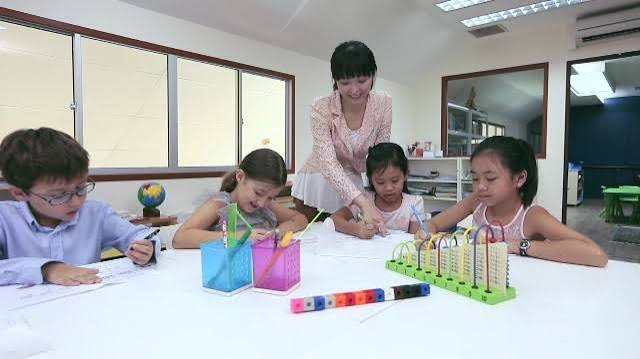

Logical thinking helps children understand information, identify patterns and make better decisions. Mathematics is a great way to develop these skills during primary school. However, memorising formulas alone may not help children understand how mathematical concepts work. With support from a Singapore Math tutor, children can learn to solve problems step by step, understand different methods and build thinking skills they can use beyond the classroom.
| Key TakeawaysSingapore Math encourages children to understand mathematical concepts rather than simply memorise calculation methods.Visual learning techniques help students recognise relationships between numbers and quantities.Structured tutoring supports logical reasoning through guided problem-solving activities.Step-by-step explanations help children approach unfamiliar questions with greater confidence.Parents can reinforce logical thinking through practical activities and everyday mathematical discussions. |
What Is Logical Thinking in Mathematics?
Logical thinking helps children understand information, find connections and make sensible decisions.
In mathematics, it means understanding a question, identifying the given information and choosing the right method to solve it.
For example, if a question asks how many pencils are left after some are given to students, children must first understand the total number of pencils and how many were given away before calculating the answer.
This step-by-step thinking becomes more important as maths problems get harder in primary school. It helps children understand questions better and solve them with confidence.
How Does the Singapore Math Approach Support Logical Thinking?
Singapore Math is a teaching method based on Singapore’s mathematics curriculum. It helps children understand maths concepts, think logically and solve problems step by step.
Instead of simply memorising formulas, students learn how mathematical methods work through the Concrete–Pictorial–Abstract (CPA) approach.
The Concrete-Pictorial-Abstract (CPA) Method
The CPA method teaches maths in three simple stages:
- Concrete: Children use physical objects, such as counters or blocks, to understand a concept.
- Pictorial: They move on to pictures and diagrams to see how numbers are connected.
- Abstract: Finally, they use numbers, symbols and equations to solve problems independently.
For example, when learning multiplication, children may first arrange objects into equal groups, draw those groups and then write a multiplication equation.
This step-by-step method makes difficult maths concepts easier to understand and apply.
6 Ways Singapore Math Tutoring Develops Logical Thinking
Structured mathematics tutoring can provide children with opportunities to explore concepts, ask questions and practise different problem-solving strategies.
Here are six ways this approach can support the development of logical thinking.
1. Encourages Children to Understand Problems Before Solving Them
Many primary school students start calculating before fully understanding a maths question.
Singapore Math teaches children to read the question carefully, understand the given information and identify what they need to find.
For example, when solving a word problem, a tutor may guide students by asking:
- What information is given?
- What do we need to find?
- How are the numbers connected?
- Which method should we use?
These simple questions help children think before solving a problem. With regular practice, they learn to understand questions and choose the right method instead of simply relying on memorised formulas.
2. Strengthens Reasoning Through Visual Models
Visual learning is an important part of Singapore Math. It helps children understand maths problems more easily.
One common method is bar modelling, where students use rectangular bars to show quantities and compare numbers in word problems.
For example, children can use bars of different lengths to compare how many books two students own. This helps them understand the relationship between the numbers before choosing the correct calculation.
Bar models are especially helpful for solving problems with multiple steps. They allow children to organise information clearly and improve their problem-solving skills.
3. Teaches Children to Recognise Patterns and Relationships
Recognising patterns helps children develop logical thinking and understand how numbers are connected.
Singapore Math encourages students to explore these connections instead of simply memorising calculations.
For example, children can learn multiplication through repeated addition and understand how equal groups form patterns. Learning place value also helps them see the relationship between units, tens and hundreds.
Tutors can support this through number sequences, visual activities and simple questions about patterns.
These activities improve children’s thinking skills and help them build a stronger understanding of mathematics.
4. Develops Step-by-Step Problem-Solving Skills
Complex maths problems often involve more than one calculation, which can make it difficult for children to know where to start.
Singapore Math teaches students to break difficult problems into smaller, simpler steps.
For example, when calculating the cost of several items and the change received, children first find the total cost before working out the remaining amount.
A tutor can guide them through each step and explain why a particular calculation is needed.
This helps children understand how to solve problems and gradually builds their confidence to work independently.
5. Encourages Independent Thinking and Decision-Making
Learning mathematics involves more than simply following instructions. Children should also learn to explore different methods and choose the most suitable way to solve a problem.
Structured tutoring helps students try different approaches instead of depending on just one method.
For example, a subtraction problem can be solved using number bonds, a number line or written calculations.
Exploring these methods helps children understand that some maths problems can be solved in different ways. They also learn to check whether their answers make sense.
This builds independent thinking and helps children become more confident in their learning.
6. Builds Confidence in Handling Unfamiliar Questions
Children may find familiar maths questions easy but struggle when similar problems are presented differently.
Singapore Math helps students understand mathematical concepts so they can apply what they have learned to new questions.
Instead of memorising answers, children learn to choose the right method for solving different problems. Regular practice with varied questions also builds their confidence.
Tutors can support this by introducing suitable challenges, giving helpful feedback and encouraging children to explain their answers.
This helps students approach difficult maths questions with greater confidence instead of feeling discouraged.
How Online Singapore Math Lessons Reinforce Logical Thinking
Online learning can support tutoring by giving children more opportunities to practise and revise maths concepts. Through Singapore math online lessons, students can learn visual explanations, interactive exercises and guided activities to improve their understanding.
For example, digital bar models help children understand maths problems, while quizzes allow them to test their knowledge. They can also revisit recorded lessons when they need extra help.Online resources work best when children actively participate instead of simply memorising answers. Combining these activities with personalised tutoring can improve problem-solving skills and encourage independent learning.
Practical Ways Parents Can Encourage Logical Thinking at Home
Parents can help children improve their maths skills through simple everyday activities without making learning feel like a formal lesson.
Here are some easy ways to encourage logical thinking:
- Ask children to explain their answers: Encourage them to share how they solved a problem instead of focusing only on the correct answer.
- Try simple number puzzles: Use age-appropriate puzzles to help children recognise patterns and find solutions.
- Use shopping examples: Ask children to add prices, compare quantities or calculate change.
- Encourage visual learning: Let children draw diagrams or use objects to understand difficult questions.
- Explore different methods: Show children that some maths problems can be solved in more than one way.
These simple activities help children understand how maths and logical thinking can be useful in everyday life, not just in school.
Final Thoughts
Building logical thinking skills early helps children approach maths with greater confidence and independence. With regular practice and proper guidance, they can learn to understand questions, choose suitable methods and solve problems more effectively.
A supportive learning environment can help children develop a positive attitude towards mathematics. Parents exploring suitable programmes can visit Spartan Maths Malaysia for additional learning support based on Singapore Maths principles.
The focus should be on helping children become curious learners who can think clearly, explore solutions and use their mathematical knowledge confidently, both inside and outside the classroom.
Frequently Asked Questions
1. How does Singapore Math help children develop logical thinking?
Singapore Math encourages children to analyse mathematical problems, recognise relationships and apply structured reasoning instead of relying entirely on memorised calculation methods.
2. What is the best age to introduce Singapore Math?
Children can begin learning Singapore Math during their early primary school years, provided the lessons are appropriate for their age and existing mathematical understanding.
3. Why is bar modelling important in Singapore Math?
Bar modelling helps children represent mathematical relationships visually, making it easier to understand quantities, comparisons and multi-step word problems.
4. Can Singapore Math tutoring help children who struggle with problem-solving?
Structured tutoring can provide additional explanations, guided practice and personalised support to help children understand challenging concepts and develop suitable problem-solving strategies.