
Assistive technology is transforming the way blind and partially sighted children access education, communication, mobility, and everyday life across the UK. As awareness of accessibility and inclusion continues to grow in 2026, charities supporting visually impaired children are increasingly integrating advanced digital tools into their services to promote independence, confidence, and equal opportunity.
From screen readers and tactile learning devices to AI-powered navigation systems and accessible educational software, modern assistive technology is no longer viewed as an optional extra. Instead, it has become a fundamental part of how specialist organisations deliver practical support to children and families navigating vision impairment.
The Growing Importance of Assistive Technology for Blind Children

Children with visual impairments often face barriers in mainstream education, social participation, and independent living. Assistive technology helps reduce these barriers by making information, environments, and communication more accessible.
UK charities supporting blind children are increasingly prioritising technology because it allows young people to:
- Access digital learning materials independently
- Develop communication and literacy skills
- Improve orientation and mobility
- Participate more fully in school and social activities
- Build confidence through greater autonomy
This shift reflects wider educational and societal changes, where digital accessibility is becoming central to inclusion strategies across schools, public services, and family support programmes.
Accessible Learning Tools in Education Support
One of the most significant areas of innovation is education. Many UK charities now provide specialist assistive technology that enables blind and partially sighted children to engage more effectively with classroom learning.
Common technologies include:
Screen Readers and Audio Software
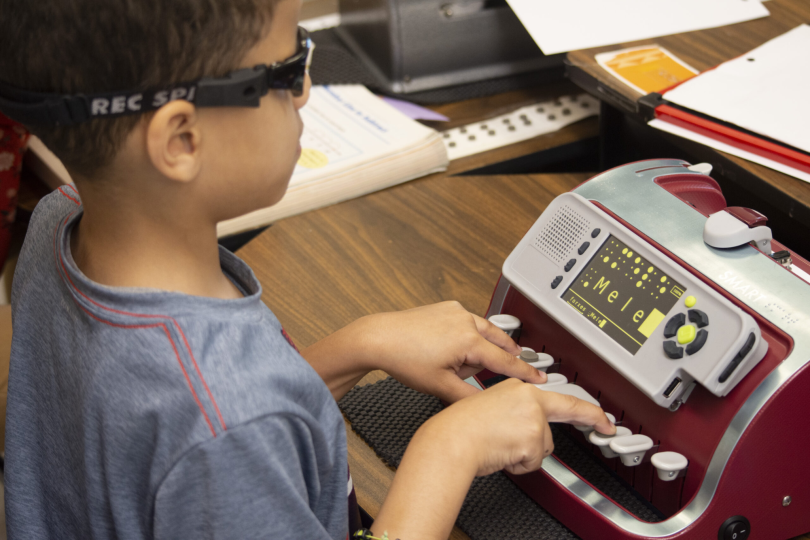
Screen readers convert on-screen text into speech or braille output, allowing children to navigate computers, tablets, and smartphones independently. These tools support reading, writing, internet access, and homework completion.
Refreshable Braille Displays
Braille displays translate digital text into tactile braille characters in real time, helping children improve literacy and access educational resources more efficiently.
Tactile and Audio Learning Resources
Charities increasingly provide tactile books, sensory learning kits, and audio-described educational materials that support early development and inclusive learning experiences.
These technologies are particularly valuable in helping visually impaired children participate alongside sighted peers within mainstream educational settings.
Supporting Independence Through Mobility Technology
Mobility and orientation are essential aspects of long-term independence. UK blind charities are increasingly introducing children and young people to technology that improves confidence in navigating everyday environments.
Examples include:
- GPS-enabled navigation tools
- Smart canes with obstacle detection
- Voice-assisted mapping applications
- Wearable sensory devices
Many charities also combine traditional mobility training with digital tools to create more adaptive and personalised support programmes.
As technology continues to evolve, AI-powered navigation systems are becoming increasingly important in helping visually impaired young people travel safely and independently.
Digital Inclusion and Social Connectivity
Assistive technology is also helping reduce social isolation among blind and partially sighted children. Accessible communication platforms, voice-controlled devices, and adapted gaming technologies are enabling greater participation in social and recreational activities.
Many UK charities now provide training for families and educators to ensure children can use these technologies effectively both at home and in school environments.
Importantly, digital inclusion is no longer solely focused on accessibility. It is increasingly centred on ensuring blind children can participate fully in the same cultural, educational, and social experiences as their peers.
The Role of Charities in Expanding Access
While assistive technology can be life-changing, cost and availability remain significant challenges for many families. UK charities play a critical role in bridging this gap through:
- Equipment grants and funding support
- Specialist assessments and recommendations
- Training programmes for parents and teachers
- Technology loan schemes
- Partnerships with schools and accessibility providers
By combining practical resources with long-term guidance, charities help ensure assistive technology becomes part of everyday support rather than a temporary intervention.
Conclusion
Assistive technology is reshaping the future of support for blind and partially sighted children across the UK. By integrating accessible learning tools, mobility solutions, and digital inclusion strategies into everyday services, charities for blind children are helping young people build independence, confidence, and long-term opportunity.
As innovation continues to advance, the role of assistive technology within specialist support services is likely to become even more significant. For blind children and their families, these developments represent more than technological progress — they represent greater accessibility, participation, and equality in everyday life.