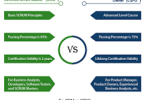

Artificial intelligence is moving from an experimental technology to a core business capability. Organisations now need professionals who can translate AI research into practical strategies, manage implementation, and lead responsible adoption. This has increased interest in advanced qualifications such as a doctorate in AI and a DBA in Artificial Intelligence. While a research doctorate can be ideal for careers centred on academic research and theoretical advancement, a DBA can offer a stronger fit for professionals who want to lead AI transformation in real-world business environments.
DBA in Artificial Intelligence vs. a Research Doctorate
The main difference lies in the purpose of the qualification. A traditional research doctorate generally focuses on creating new knowledge through original theoretical or empirical research. It is often suited to individuals planning careers in universities, research institutions, or highly research-oriented technology roles.
A DBA in Artificial Intelligence, in contrast, focuses on applying advanced knowledge to organisational challenges. Research remains an important part of the programme, but the emphasis is typically on solving practical business problems, improving decision-making, and developing strategies that can be implemented within organisations.
For an experienced manager, technology leader, consultant, or entrepreneur, this applied orientation can be particularly valuable.
When Applied AI Leadership Has an Advantage
A research doctorate may be the better choice when the primary ambition is to become an academic researcher or contribute directly to the theoretical development of AI. However, an applied doctoral pathway can be advantageous when the goal is to lead organisations through AI adoption.
AI implementation requires much more than technical knowledge. Senior leaders must evaluate business cases, allocate resources, manage teams, address ethical concerns, assess risks, and measure the commercial impact of AI initiatives.
A DBA can bring these areas together by connecting doctoral-level research with organisational strategy.
For example, an AI leader may need to determine whether an organisation should invest in generative AI, predictive analytics, intelligent automation, or another technology. The challenge is not simply understanding how the technology works. It is determining whether the investment supports business objectives and how it can be implemented effectively.
Building Strategic AI Leadership Skills
A DBA in Artificial Intelligence can help professionals develop an interdisciplinary perspective. AI sits at the intersection of technology, management, data, operations, finance, and organisational behaviour.
This means senior AI professionals increasingly need skills such as:
- AI strategy and digital transformation
- Data-driven decision-making
- Technology and innovation management
- AI governance and risk management
- Organisational change
- Business process optimisation
- Ethical and responsible AI adoption
- Leadership of technical and non-technical teams
These capabilities can be particularly relevant for professionals moving into executive positions where technology decisions must be aligned with wider organisational objectives.
The Role of Doctoral Research in Business
Choosing a DBA does not mean choosing between research and practical experience. Applied doctoral research can address complex organisational questions using rigorous research methods.
A professional might investigate how organisations can improve generative AI adoption, how AI affects managerial decision-making, how employees respond to AI-driven transformation, or how businesses can establish effective AI governance frameworks.
Such research can produce findings that are relevant beyond an academic setting because the research problem originates from an actual organisational challenge.
This is one of the strongest arguments for pursuing a DBA rather than assuming that all doctoral education must follow a purely theoretical route.
Career Opportunities After a DBA in Artificial Intelligence
The value of an AI-focused DBA depends on the individual’s existing professional experience, research interests, and career objectives. For experienced professionals, it can support progression towards senior roles such as:
- Chief AI Officer
- AI Strategy Director
- Digital Transformation Director
- AI Programme Director
- Technology Executive
- AI Consultant
- Innovation Director
- Data and AI Leadership roles
- Academic or executive education positions
The qualification itself does not guarantee an executive position. Professional experience, leadership capability, technical understanding, and the ability to deliver measurable business outcomes remain important.
When a Research Doctorate Is the Better Choice
A DBA should not automatically be considered superior to a traditional doctorate. The right choice depends on the intended career path.
A research doctorate may be more appropriate for professionals who want to:
- Conduct fundamental AI research
- Develop new algorithms or computational methods
- Pursue a research-intensive academic career
- Work primarily in research laboratories
- Contribute to theoretical AI knowledge
- Continue into highly specialised research roles
Someone whose primary objective is to advance AI theory may therefore benefit more from a conventional research doctorate.
Making the Right Doctoral Choice
The decision should begin with the desired career rather than the title of the qualification. Professionals interested in developing new AI theories, models, or computational techniques may find a research doctorate more aligned with their ambitions.
Those interested in using AI to solve organisational problems and lead business transformation may find a DBA more relevant.
The distinction can be summarised simply: a research doctorate generally asks, “What new knowledge can be created?” An applied DBA asks, “How can advanced knowledge be used to solve important organisational problems?”
Both pathways involve rigorous doctoral research, but their practical orientation can differ significantly.
Conclusion
The growing importance of AI has created demand for leaders who can bridge technology and business. A DBA in Artificial Intelligence can be particularly valuable for experienced professionals who want to move beyond technical implementation and take responsibility for AI strategy, governance, transformation, and organisational outcomes.
A research doctorate remains an excellent pathway for those pursuing fundamental research and academic careers. However, when the objective is to lead AI adoption, manage transformation, and turn AI capabilities into business value, an applied doctoral education may provide a more directly relevant route.
The strongest choice is therefore not necessarily the doctorate with the most technical title. It is the qualification whose research approach, learning outcomes, and professional orientation match the career the candidate intends to build.