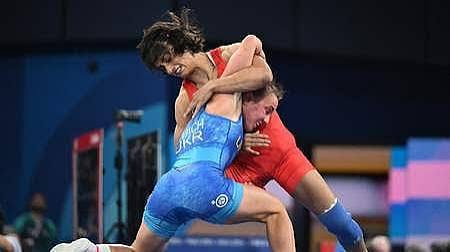

Wrestling has occupied a distinct place in India’s sporting structure for generations, especially in rural areas where access to organized sport is uneven. While many professional disciplines depend on costly equipment, private coaching, travel, and urban facilities, wrestling can develop through community training spaces, local competitions, and coaching networks. This makes it one of the few sports in which athletes from villages can move from informal training into state, national, and international competition without entering an expensive development system at the beginning of their careers.
The wider entertainment market has changed how young people spend time, with mobile platforms, streaming, social media, and products such as the jetx game app competing for attention, yet wrestling continues to attract participants because it offers something more concrete: a possible occupation. In many rural communities, success can lead not only to medals but also to employment, financial support, scholarships, recognition, and access to institutions that would otherwise be difficult to enter.
Low Entry Costs Make Wrestling More Accessible
One reason wrestling remains important in rural India is the relatively low cost of beginning the sport. A young athlete does not need a large amount of personal equipment. Training can start with basic clothing, a suitable surface, coaching, and regular practice.
This matters in households where spending on sport must compete with education, transport, farming costs, and other family needs. A sport that requires expensive gear or frequent travel may become unrealistic before talent can even be evaluated.
Wrestling reduces that initial barrier. Traditional training centers can operate with limited infrastructure, and groups of athletes often share facilities. The result is a broader entry point for children from families that may not be able to finance participation in other sports.
Village Training Systems Create an Early Pathway
Wrestling also benefits from local training traditions. In several regions, village-based wrestling centers have long served as places where young athletes learn technique, conditioning, discipline, and competition habits.
These systems provide something that many rural sports lack: continuity. A child can begin training close to home, compete locally, gain attention at district level, and gradually enter larger competitions.
The coach often plays a central role in this process. Beyond technical instruction, coaches may guide athletes toward trials, tournaments, sports hostels, or institutional teams. In areas with limited formal scouting, these relationships can connect rural talent with professional structures.
Physical Work Can Support Early Athletic Development
Rural life does not automatically produce elite athletes, but some aspects of it can contribute to the physical base required for wrestling. Daily activity, manual work, walking, and limited sedentary time may help develop strength, balance, and general work capacity from an early age.
Wrestling then converts these qualities into sport-specific ability. Athletes must learn positioning, grip control, explosive movement, defense, and tactical decision-making.
This transition is important because raw strength alone is not enough. Successful wrestlers must understand leverage, timing, body control, and energy management. Local training environments that combine repeated practice with competition can turn physical potential into technical skill.
Professional Opportunities Extend Beyond Prize Money
The economic logic of wrestling is another reason families may support participation. In many sports, only a small number of elite athletes can earn a stable income from competition itself. Wrestling offers additional routes.
Strong performance at state or national level can improve access to institutional teams, sports quotas, scholarships, and employment in public-sector organizations. For a rural household, this can change the perceived value of sport.
Parents may be more willing to support years of training when success can lead to a salary or long-term employment rather than uncertain prize money. This makes wrestling different from activities in which professional prospects depend mainly on commercial leagues or sponsorship.
The sport can therefore function as both competition and social mobility.
Local Heroes Make the Path Visible
Participation grows when young athletes can see people from similar backgrounds succeed. Wrestling has produced many competitors who began in small towns or villages before reaching major events.
Their careers make the pathway understandable. A young athlete does not have to imagine an unfamiliar route through private academies or foreign training systems. The progression from village training to district competition, state selection, national camps, and international events is visible.
This matters in communities where career decisions are often shaped by examples rather than abstract possibilities. If one athlete from a district succeeds, younger participants may believe the same route is available to them.
Successful wrestlers can also return as coaches, mentors, or organizers, strengthening the local system.
Competition Starts Close to Home
Another advantage is the existence of local wrestling competitions. Athletes can test themselves before reaching national structures.
Local events provide practical experience in dealing with pressure, opponents, spectators, and match tactics. They also give coaches a way to evaluate progress.
This early competition can be more important than highly structured training without regular matches. Wrestling depends heavily on decision-making against resistance. Techniques that work in practice may fail against an opponent who reacts unpredictably.
Frequent competition helps athletes learn this difference early.
Rural Athletes Still Face Structural Barriers
The pathway is accessible, but it is not easy. Rural wrestlers can face limited medical support, inconsistent nutrition, poor recovery facilities, and fewer opportunities for sports science guidance.
As athletes progress, these disadvantages become more significant. At elite level, success depends not only on strength and technique but also on injury prevention, rehabilitation, nutrition, performance analysis, and planned training loads.
Travel is another challenge. Major training centers and competitions may be far from home, forcing young athletes to relocate or spend long periods away from their families.
Financial pressure can also increase as competition becomes more serious. The early stages may be inexpensive, but national-level participation can involve travel, diet, coaching, and recovery costs.
Wrestling Connects Tradition with Career Opportunity
Wrestling remains influential in rural India because it combines cultural familiarity with a practical route into professional sport. It does not require athletes to begin inside a large commercial academy, and the first stages of development can take place within local communities.
The sport also offers outcomes that matter beyond competition. Employment opportunities, scholarships, institutional support, and public recognition give families reasons to view wrestling as a possible career rather than only a pastime.
Its future, however, depends on whether the development system can preserve this accessibility while improving medical care, coaching standards, athlete protection, and training infrastructure. Rural India continues to produce wrestling talent because the pathway begins close to the athlete. Strengthening what happens after that first step will determine how many of those athletes can turn potential into long professional careers.