
Around the age of six, many children begin taking exciting steps towards reading independently. They may start recognising familiar words, sounding out unfamiliar ones, and following simple stories without needing an adult to read every sentence. For parents in Malaysia, this is a wonderful opportunity to help children develop confidence and discover the enjoyment of reading on their own.
However, every child learns at a different pace. Some six-year-olds are ready for short chapter books, while others still benefit from picture books and stories with simple sentences. The goal is not to rush children towards longer books but to find reading materials that match their abilities and keep them interested.
With the right books, encouragement, and a balance of independent and shared reading, parents can help children build strong reading habits between the ages of six and eight.
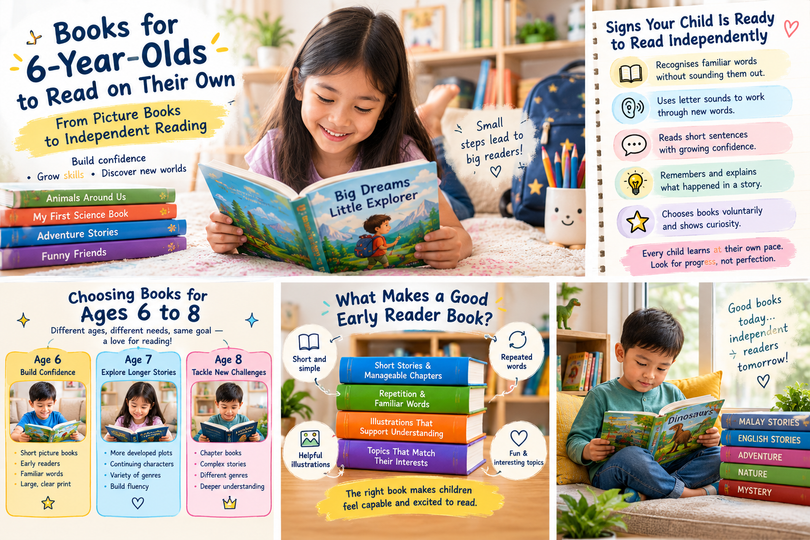
Signs Your Child Is Ready to Read Independently
Children do not need to read every word perfectly before they can begin exploring books alone. Instead, parents can look for several signs that their child is becoming more comfortable with reading.
For example, your child may recognise familiar words without sounding them out each time, use letter sounds to work through new words, or read a short sentence with increasing confidence. They might also remember what happened in a story and explain it in their own words.
Another encouraging sign is curiosity. A child who picks up a book voluntarily, asks what a word means, or wants to discover what happens next may be ready for more independent reading opportunities.
Comprehension is just as important as reading words correctly. After reading a short story, ask your child to describe the main character, explain a favourite moment, or tell you what happened at the end. These conversations can help you understand whether the story makes sense to them.
Remember that readiness varies from child to child. A six-year-old who needs help with unfamiliar words can still practise independent reading using familiar, accessible books. If you have ongoing concerns about your child’s reading progress, their teacher can offer guidance on suitable next steps.
What Makes a Good Early Reader Book?
The best early reader books make children feel capable while giving them opportunities to learn something new. When choosing books for young readers, consider the following features.
Short Stories and Manageable Chapters
A book with a few sentences per page or short chapters can feel less intimidating than a long story filled with dense text. Children can complete a section, feel proud of their progress, and return later without losing track of the story.
For children beginning to explore chapter books, look for stories with clear events, familiar settings, and a straightforward plot. School adventures, animal characters, friendship, and everyday family experiences can be appealing starting points.
Repetition and Familiar Words
Repeated words and phrases help children become familiar with common vocabulary. When the same phrase appears throughout a story, children have opportunities to recognise it more quickly and read with greater confidence.
Predictable patterns can be particularly helpful for beginners. A story might repeat a question, a character’s response, or a sequence of events. Once children understand the pattern, they can focus more attention on unfamiliar words and the meaning of the story.
Illustrations That Support Understanding
Pictures remain valuable even after children begin reading independently. Illustrations provide clues about characters, actions, settings, and unfamiliar situations.
A child who encounters a difficult word may use the surrounding sentence and illustration to help understand its meaning. Pictures also make stories more engaging and provide opportunities to discuss what is happening.
There is no need to avoid illustrated books simply because your child is getting older. A well-written picture book can offer rich vocabulary, interesting ideas, and meaningful storytelling.
Topics That Match Your Child’s Interests
Interest is one of the strongest reasons children return to books. A child who loves dinosaurs may enjoy nonfiction books about prehistoric animals, while another may prefer funny school stories, football adventures, mysteries, or magical characters.
Let your child explore different subjects instead of choosing every book based on its educational value. When children genuinely want to discover what happens next, reading is more likely to become an enjoyable habit.
Choosing Books for Ages Six to Eight
Children between six and eight years old can develop their reading skills rapidly, but they may still need different levels of support. Choosing books according to ability and interest is more useful than relying on age alone.
Age Six: Build Confidence With Simple Books
At six, many children benefit from short picture books, early readers, and stories with familiar words. Large, clear print and manageable sentences can make reading easier to follow.
Choose stories that allow children to practise sounding out words without encountering too many difficult phrases at once. Repeated reading is also helpful. Reading a favourite story several times can build familiarity, fluency, and confidence.
Parents can encourage progress by asking children to read a few pages independently before offering help when needed.
Age Seven: Explore Longer Stories
As children become more comfortable reading sentences and following a plot, they may enjoy books with longer stories and more developed characters.
Short chapter books can introduce the idea of following a story across several reading sessions. Books that contain illustrations every few pages can make this transition easier.
Children may also enjoy simple mysteries, humorous stories, animal adventures, and books about friendships. Series featuring familiar characters are particularly appealing because children already understand the setting and personalities when they begin the next book.
Age Eight: Encourage Choice and Variety
By eight, some children are ready for more detailed stories, while others continue to enjoy picture books and shorter texts. Both are valid choices.
Offer a variety of fiction and nonfiction, including adventure stories, science books, biographies written for children, and age-appropriate comics or graphic novels. These formats allow children to discover what they enjoy while developing different reading skills.
When looking for books for ages 6 to 8, check the vocabulary, sentence length, layout, and subject matter rather than choosing solely by the age printed on the cover. A book that feels manageable and interesting is often a better starting point than one that is simply more advanced.
Balance Reading Together With Reading Alone
Independent reading is important, but it does not mean parents should stop reading with their children. Shared reading continues to offer valuable opportunities to build vocabulary, discuss ideas, and enjoy stories that may be too challenging for a child to read alone.
A simple approach is to combine three types of reading throughout the week.
Reading alone: Let your child spend ten minutes exploring a book they can manage independently. Stay nearby so they can ask questions if necessary.
Reading together: Take turns reading pages or sentences. You can help with unfamiliar words while allowing your child to do most of the reading.
Reading aloud to your child: Choose a more advanced story and read it together at bedtime or during a quiet family moment. This exposes children to richer vocabulary and more complex plots without requiring them to decode every word themselves.
For example, your child might read a short animal story independently while you read a longer adventure story aloud in the evening. Both activities support reading development in different ways.
Most importantly, keep shared reading enjoyable. It should remain an opportunity for connection, not simply another lesson.
How to Keep Children Motivated to Read
Some children become enthusiastic readers quickly, while others need time to discover what they enjoy. Parents can support motivation by creating positive experiences around books.
Let Children Choose Their Books
Give your child a small selection of suitable books and allow them to decide what to read. Visiting a library or browsing a children’s book collection together can make the process more exciting.
For Malaysian families, children’s book discovery for Malaysian families can begin with exploring a mix of locally relevant stories, English-language books, Bahasa Melayu titles, and subjects that reflect children’s individual interests.
Let your child change books if a particular story does not appeal to them. Discovering personal preferences is part of becoming an independent reader.
Create a Comfortable Reading Space
You do not need a dedicated library to encourage reading. A small shelf, a basket of books, or a comfortable corner with cushions can be enough.
Keep books within your child’s reach so they can choose one whenever they have a quiet moment. Rotating a few titles every couple of weeks can also renew interest without requiring you to buy new books constantly.
Celebrate Progress Without Pressure
Praise effort rather than focusing only on how many books your child finishes. Learning a new word, completing a short story, or reading a sentence more confidently are all achievements worth celebrating.
Avoid comparing your child’s reading speed with that of siblings or classmates. Children develop at different rates, and excessive pressure can make reading feel like a chore.
You can also make reading social by inviting your child to tell another family member about a favourite story or draw a picture of a memorable scene.
Connect Books With Everyday Experiences
If your child reads a story about animals, visit a zoo or look for the animals in a local nature book. After reading a story about food, talk about familiar ingredients while preparing a meal together.
These simple connections show children that books relate to the world around them. Reading becomes more meaningful when children can connect stories with experiences they understand.
Build a Simple Daily Reading Routine
Consistency helps children become comfortable with independent reading. Rather than setting an ambitious target, start with a routine your family can maintain.
- Choose a regular time: Try reading after school, following dinner, or before bedtime.
- Start with ten minutes: Short sessions can be more manageable than expecting a young child to sit for a long period.
- Keep books visible: Place a few suitable titles in areas where your child likes to relax.
- Reduce distractions: Set aside phones and other screens during reading time.
- Talk about the story: Ask one or two simple questions about what your child has read.
- Be flexible: If your child is tired, shorten the session or enjoy a shared read-aloud instead.
A routine should support reading, not turn it into a daily struggle. Some days your child may want to read independently, while on other days they may prefer you to read aloud. Allowing that flexibility helps preserve their enjoyment of books.
What If Your Child Still Prefers Picture Books?
There is no need to remove picture books as soon as your child reaches six. Picture books can contain sophisticated ideas, rich vocabulary, humour, and complex emotions. They also allow children to interpret illustrations and discuss details that might be missed in a text-only story.
If your child enjoys picture books, use them as a bridge towards longer texts. You could choose a picture book with a slightly longer story, try an illustrated early reader, and eventually introduce a short chapter book with plenty of pictures.
Read the opening chapter of a new book together if your child finds it difficult to begin alone. Once they understand the characters and setting, they may feel more comfortable continuing independently.
The aim is gradual progress. Children are more likely to develop confidence when they feel supported rather than pushed into books that are beyond their current reading abilities.
Conclusion
Helping a six-year-old become an independent reader is about more than moving from picture books to chapter books. It involves finding stories that match the child’s abilities, encouraging curiosity, and creating opportunities to practise reading without pressure.
For children between six and eight, short chapters, repeated phrases, supportive illustrations, and interesting subjects can make books more approachable. Combining independent reading with shared stories and family read-aloud sessions also helps children build confidence while maintaining a positive relationship with books.
For parents in Malaysia, a varied home collection that includes familiar local stories and different genres can make reading more enjoyable. Start with manageable sessions, allow your child to choose, and celebrate small achievements along the way.
With patience and encouragement, children can gradually move towards independent reading while discovering that books are not just tools for learning but also a source of imagination, enjoyment, and adventure.